Understanding CI/CD: How to Accelerate Software Development
CI/CD is a software development practice that automates application testing and delivery. Learn what CI/CD means, how it works, its benefits, and the common tools used to make software development faster and more efficient.
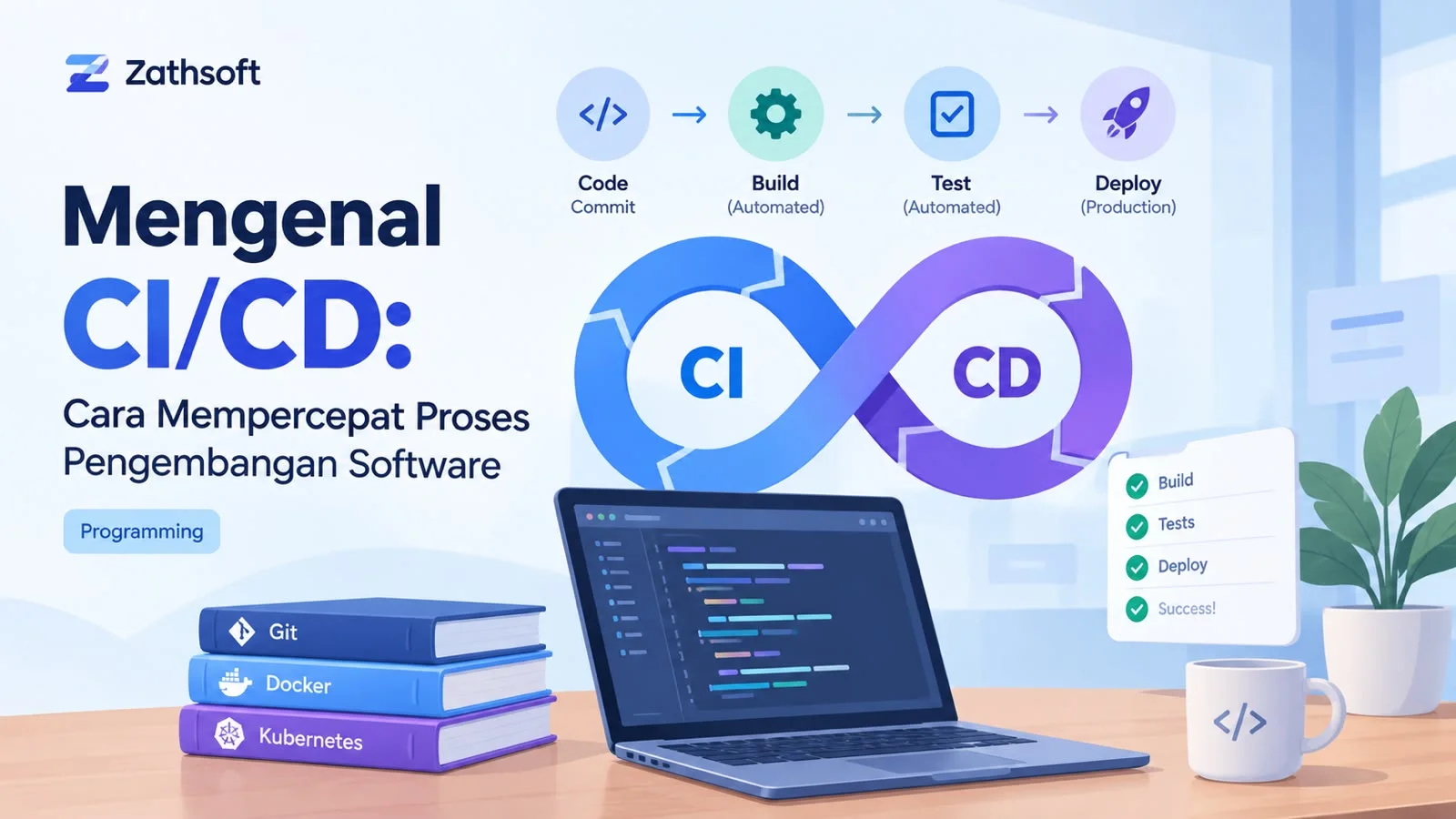
Table of Contents
Introduction
In software development, speed and quality are two important priorities. Developers need to ensure that applications can be developed, tested, and released efficiently without spending too much time on manual tasks. One widely used approach to achieving these goals is CI/CD.
CI/CD helps development teams automate different stages of the software development process. With a more structured workflow, teams can identify errors earlier and release application updates more consistently.
What Is CI/CD?
CI/CD stands for Continuous Integration and Continuous Delivery or Continuous Deployment. These practices are closely related to automation in software development and delivery.
Continuous Integration (CI) is the practice of regularly merging code changes from multiple developers into a shared repository. Each change can trigger automated build processes and tests to help detect issues early.
Continuous Delivery (CD) ensures that code that has passed testing is always ready for release. The process leading up to release is automated, but deployment to the production environment usually requires approval.
Continuous Deployment goes a step further by automatically releasing every change that passes all required checks to the production environment without manual approval for each release.
How Does CI/CD Work?
A typical CI/CD process consists of several stages.
1. Developers Write and Submit Code
Developers make changes to the source code and push them to a repository such as GitHub or GitLab.
2. The Build Process Runs
The CI/CD system runs a build process to prepare the code for testing or execution. At this stage, the system may also check for certain errors.
3. Automated Testing
The code is tested using automated testing tools to verify that features work as expected and that new changes do not break existing functionality.
4. Checks and Release Preparation
If all checks pass, the application can be prepared for release. Teams may require an approval step before deploying the application to production.
5. Deployment
The application is deployed to the target server or environment. In a continuous deployment workflow, this stage can happen automatically after all required checks succeed.
Benefits of CI/CD in Software DevelopmentFaster Development
Automation reduces repetitive manual work, allowing developers to focus more on building features and fixing problems.
- Earlier Error Detection
Running tests whenever code changes helps teams identify issues before those changes reach users. - Improved Code Quality
Consistent testing helps ensure that changes meet the standards established by the development team. - Better Team Collaboration
CI/CD helps align the workflows of developers, testers, and operations teams, making the development process more organized. - More Consistent Releases
Standardized build, testing, and deployment steps help reduce mistakes caused by manual processes.
Common CI/CD Tools
Several tools can be used to build CI/CD pipelines, including:
- GitHub Actions: Automates workflows directly within GitHub repositories.
- GitLab CI/CD: Provides pipelines for building, testing, and deploying software.
- Jenkins: An automation platform that can be configured for various development needs.
- CircleCI: Helps run build and testing processes automatically.
- Azure Pipelines: Supports automated builds, testing, and deployments for different types of projects.
The best tool depends on project requirements, the technology stack, and the team’s capabilities.
Challenges of Implementing CI/CD
Although CI/CD offers many benefits, implementation requires preparation. Teams need reliable automated tests, well-managed pipeline configurations, and secure handling of credentials used during deployment.
Pipelines should also be monitored and maintained regularly to keep them aligned with application changes.
Conclusion
CI/CD is an important approach in modern software development because it automates code integration, testing, and application release processes. It can improve efficiency, help detect errors earlier, and make deployments more consistent.
By choosing suitable tools and establishing reliable testing practices, development teams can create more effective workflows and deliver higher quality software.

Uploaded by
Kirania Aureliyanti
Tech Contributor