The Differences Between HTML, CSS, JavaScript, and PHP in Website Creation.
HTML, CSS, JavaScript, and PHP are technologies frequently used in website development. Each serves a distinct purpose—ranging from defining page structure, managing visual presentation, and adding interactivity, to processing data on the server side. This article explores what these technologies are, how they differ, examples of their use, and a recommended learning path for beginners.
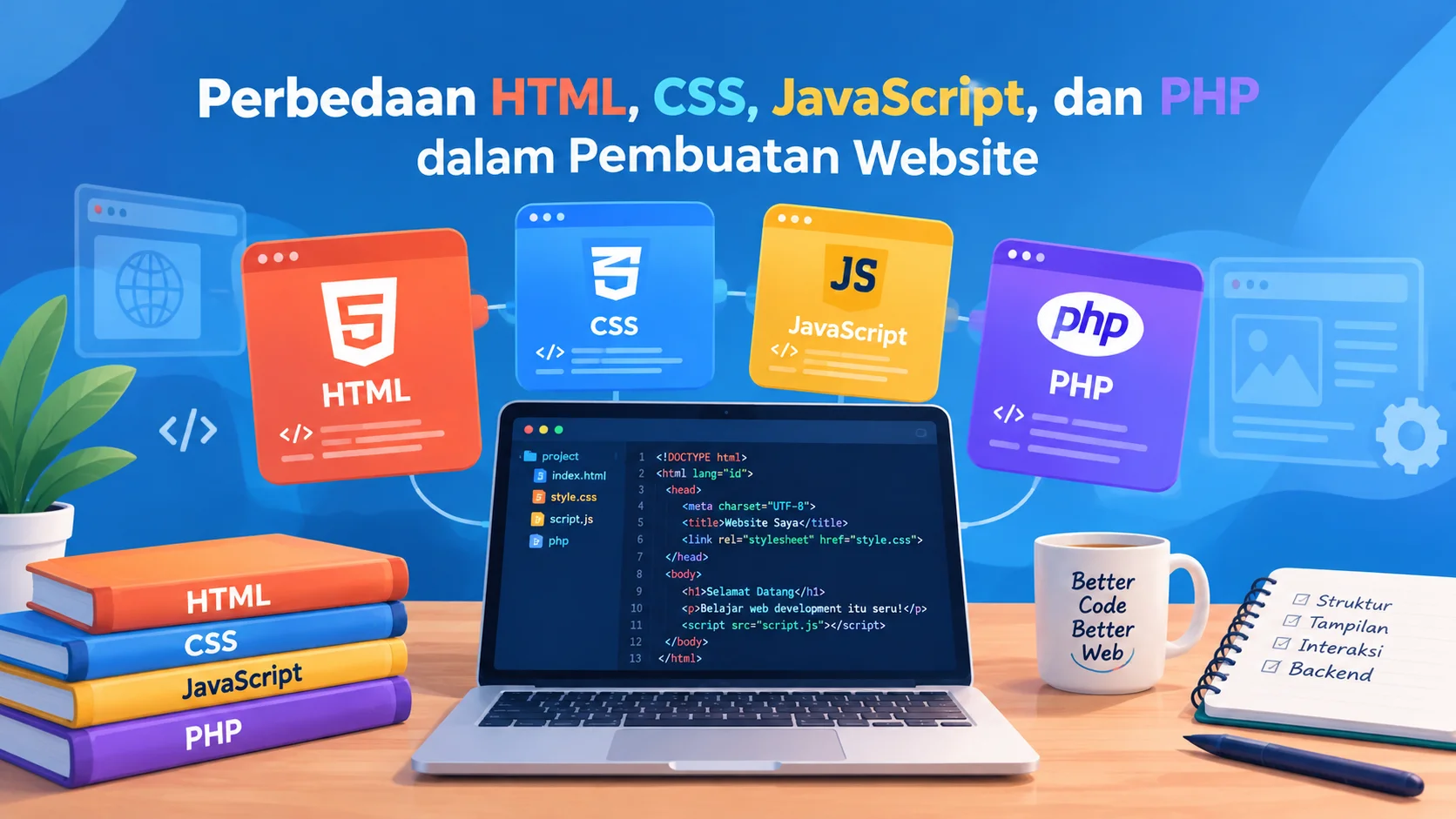
Table of Contents
Introduction
Websites have become an essential part of digital life, ranging from personal sites, blogs, and online stores to corporate information systems. To build a well-functioning website, several technologies are commonly used, such as HTML, CSS, JavaScript, and PHP.
For beginners, these four technologies might appear similar since they are all related to website creation. In reality, however, each serves a distinct function and operates in a different way. Understanding these differences can help beginners approach learning web development in a more focused manner.
1. HTML: Building a Website Structure
HTML (HyperText Markup Language) is a markup language used to define the structure and content of a webpage. HTML specifies the elements to be displayed, such as headings, paragraphs, images, links, and forms.
HTML code example:
<!DOCTYPE html> <html> <head> <title>Website Pertamaku</title> </head> <body> <h1>Selamat Datang</h1> <p>Ini adalah website pertamaku.</p> </body> </html>
In that example, the <h1> tag is used to display a heading, while the <p> tag is used to create a paragraph. The browser reads this structure to display the page content.
2. CSS: Controlling the Appearance of a Website
CSS (Cascading Style Sheets) is used to control the appearance of a website page. With CSS, developers can define colors, text sizes, fonts, spacing between elements, and page layout.
Example of CSS code:
body { font-family: Arial, sans-serif; background-color: #f0f4f8; } h1 { color: blue; text-align: center; } p { font-size: 16px; }
The code governs the page's font, background color, heading color, and paragraph text size. CSS makes a website look more attractive and pleasant to use.
3. JavaScript: Creating Interactive Websites
JavaScript is a programming language used to add interactivity and dynamic behavior to websites. Examples include interactive buttons, form validation, navigation menus, and content updates.
Example of JavaScript code:
<button>Klik Saya</button> <script> function tampilkanPesan() { alert("Selamat datang di website!"); } </script>
When the button is clicked, the browser executes a JavaScript function and displays a message. JavaScript can also be used on the server side through environments such as Node.js.
4. PHP: Processing Data on the Server Side
PHP is a programming language widely used for creating dynamic websites. It runs on the server side and can be used to process forms, manage login sessions, and interact with databases.
Example of PHP code:
<?php $nama = "Andi"; echo "Selamat datang, " . $nama . "!"; ?>
When the code is processed by a server that supports PHP, the result is the text “Welcome, Andi!”. PHP is also frequently used in conjunction with databases, such as MySQL, to store and retrieve user data.
5. Differences Between HTML, CSS, JavaScript, and PHP
Here are the primary functional differences between these four technologies:
- HTML is used to define the structure and content of a page.
- CSS is used to manage the design and layout.
- JavaScript is used to create interactivity on a page and can run in both the browser and on the server.
- PHP is used to process requests and data on the server side.
For example, on a login page, HTML creates the form, CSS controls its appearance, JavaScript can verify that the input is complete, and PHP processes the login data on the server, checking it against the information stored in the database.
6. Can All Four Be Used Together?
Yes, all four of these technologies can be used in a single website project. HTML, CSS, and JavaScript generally handle the frontend, while PHP can manage the backend.
The frontend is the part of a website that visitors see and interact with. The backend handles server-side processes, such as data processing and communication with a database.
Not every website requires PHP. Simple websites that merely display information can be built using only HTML and CSS. JavaScript can be added to provide interactivity, whereas PHP is necessary when a website requires server-side processing.
7. Learning Sequence for Beginners
For those just starting out, here is a recommended learning sequence:
- Learn HTML to understand the basic structure of a webpage.
- Learn CSS to manage the visual appearance and create responsive designs.
- Learn JavaScript to understand variables, functions, conditionals, loops, and page interactivity.
- Learn PHP if you want to build dynamic websites that process data on a server.
- Learn about databases, such as MySQL, if your project requires data storage.
Once you have grasped the fundamentals, try building simple projects such as a profile page, a calculator, a registration form, or a data logging application.
Conclusion
HTML, CSS, JavaScript, and PHP serve different functions but complement one another in website development. HTML establishes the structure, CSS manages the appearance, JavaScript adds interactivity, and PHP processes data on the server side.
By understanding the role of each technology and learning them step by step, beginners can build a solid foundation for developing more complex websites.

Uploaded by
Kirania Aureliyanti
Tech Contributor