Understanding AI in Everyday Life
Artificial Intelligence (AI) is increasingly used in everyday life. This technology helps people complete tasks, find information, and improve productivity more easily.
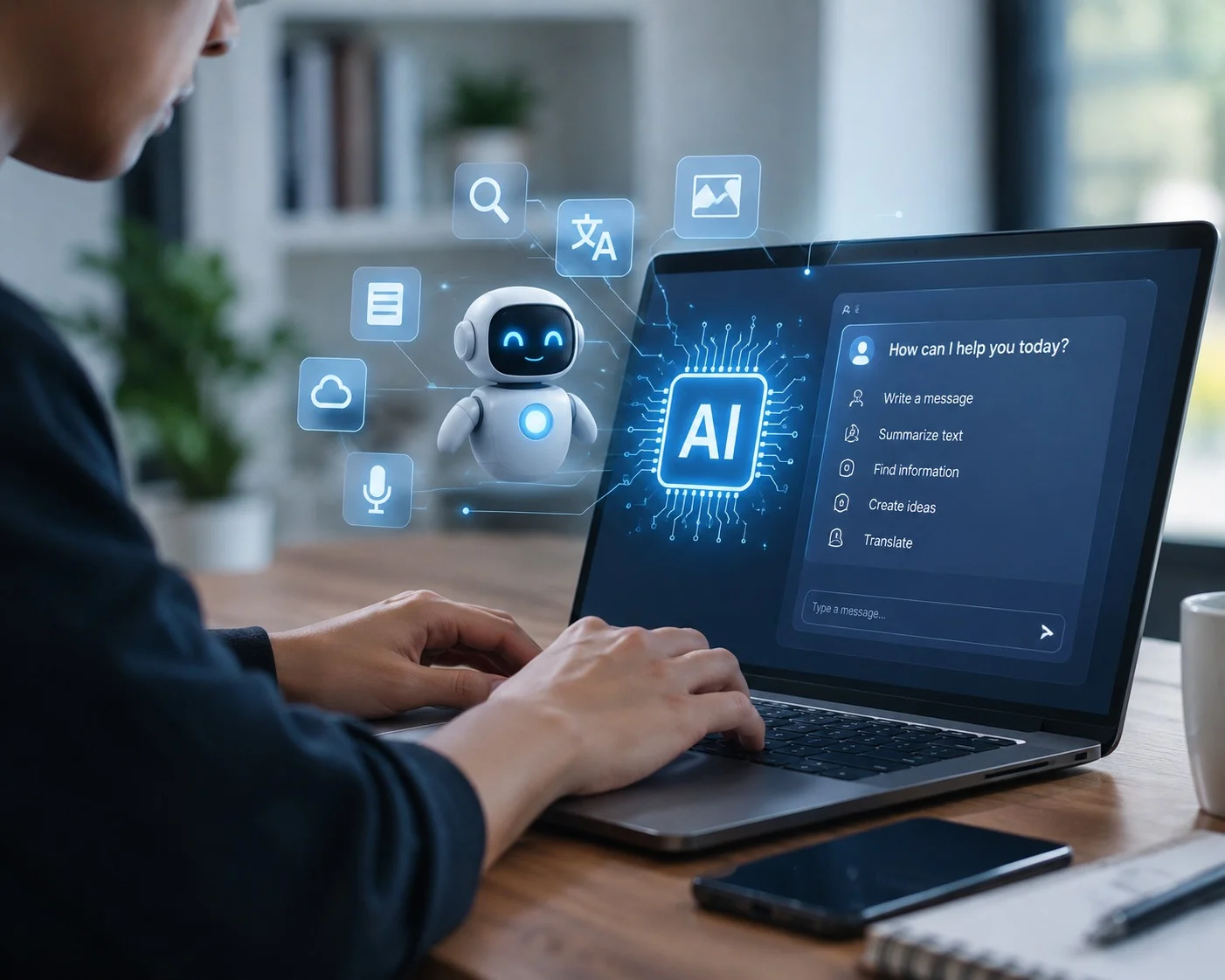
Table of Contents
What Is Artificial Intelligence?
Artificial Intelligence (AI) is a technology that enables computers and machines to perform tasks that usually require human intelligence. Examples include understanding language, recognizing images, answering questions, and providing recommendations based on data.
AI systems use algorithms and data to identify patterns and generate relevant responses. Today, AI continues to develop and is being used in various fields, from education to the workplace.
Examples of AI in Everyday Life
AI can be found in many applications and devices that people use regularly. Here are some common examples:
- Virtual Assistants: AI helps users find information, set reminders, and perform tasks through voice commands.
- Language Translation: AI technology can quickly translate text from one language to another.
- Content Recommendations: Video and music platforms use AI to suggest content based on user activity.
- Content Creation: AI can help write drafts, generate ideas, summarize information, and create images.
- Education: AI can explain learning materials, create practice questions, and help students understand difficult concepts.
Benefits of AI in Human Life
One of the main benefits of AI is its ability to help people complete tasks more efficiently. Tasks that usually take a long time can be supported by automation, allowing people to focus on work that requires creativity and critical thinking.
AI also makes information more accessible. Users can obtain initial explanations about different topics without searching for everything manually. In education, AI can serve as a learning assistant that helps students understand materials according to their needs.
Furthermore, AI can help businesses process data, improve customer service, and identify patterns that may be difficult to recognize manually.
Challenges of Using AI
Despite its many benefits, AI still has limitations. AI systems can produce incorrect, incomplete, or outdated information. Therefore, users should verify important information using reliable sources.
Privacy is another important consideration. Users should avoid entering passwords, personal data, or confidential information into AI services with unclear security practices or data policies.
In addition, excessive AI use may cause people to become too dependent on technology. AI should be used as a supporting tool rather than a replacement for human thinking, creativity, and judgment.
Tips for Using AI Responsibly
To get the most out of AI, use the technology responsibly. Clearly explain your needs when giving instructions, review the results, and compare important information with other sources.
Use AI to support learning and develop skills rather than simply copying answers without understanding them. This approach allows users to improve their abilities while benefiting from modern technology.
Conclusion
Artificial Intelligence is a technology that offers many conveniences in everyday life. From finding information to assisting with work, AI can improve efficiency when used appropriately.
However, users should understand its limitations, protect their privacy, and verify the accuracy of information. When used responsibly, AI can become a valuable supporting technology for education, work, and daily activities.

Uploaded by
Muazzam Azri Lubis
Tech Contributor